






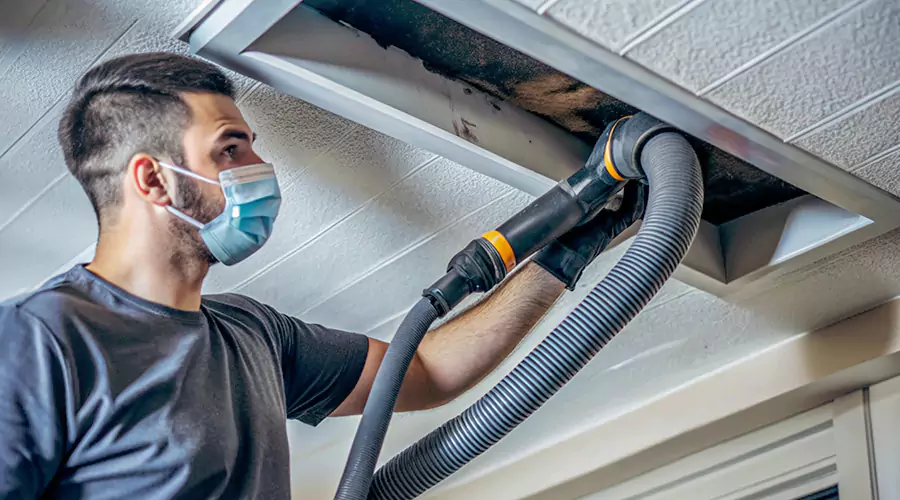
Mold inside air ducts is a concern many homeowners worry about, especially when they notice musty smells, allergy like symptoms, dark spots around vents, or moisture problems near the HVAC system. Air ducts are designed to move air through your home, but if moisture enters the system and combines with dust or debris, mold may begin to grow in certain areas.
Mold needs moisture, organic material, and the right indoor conditions to grow. Since dust, pollen, and other particles can collect inside ductwork over time, moisture is often the missing factor. When ducts stay damp because of condensation, high humidity, leaks, or HVAC drainage problems, mold risk can increase.
Knowing the warning signs can help you decide when to schedule an air duct inspection, HVAC inspection, or professional air duct cleaning service.
Why Mold Can Grow Inside Air Ducts?
Air ducts should normally stay dry. Mold becomes a concern when moisture is present inside or around the duct system. This can happen when ducts are poorly insulated, the HVAC system has drainage problems, indoor humidity is too high, or air leaks pull damp air into the ductwork.
Mold may grow inside ducts, near vent openings, on the evaporator coil, around the drain pan, or in nearby HVAC components. Sometimes the smell or particles travel through the vents, making it seem like the entire duct system is affected.
Common moisture sources include:
- Condensation on duct surfaces
- High indoor humidity
- Clogged condensate drain lines
- Leaky ductwork
- Water leaks near ducts
- Damp crawl spaces or attics
- Dirty evaporator coils
- Poor HVAC airflow
1. Musty Smells From the Vents
A musty smell is one of the most common signs of possible mold inside air ducts or HVAC components. The odor may be strongest when the AC first turns on or when air begins moving through the vents.
The smell may seem damp, stale, earthy, or similar to wet cardboard. If the odor keeps returning after cleaning the room, the source may be inside the duct system or HVAC equipment.
Musty odors should be inspected because they may point to trapped moisture, mold, mildew, or dirty duct buildup.
2. Dark Spots Around Vent Covers
Dark spots around vent covers can be a warning sign, especially if they look like mold growth rather than simple dust. These spots may appear black, green, brown, gray, or dark colored around the edges of supply vents or return grilles.
However, not every dark mark is mold. Dust can collect around vents due to airflow patterns. A professional inspection can help determine whether the material is dust, dirt, soot, or possible microbial growth.
Avoid wiping suspected mold aggressively because this can spread particles.
3. Visible Growth Inside the Duct Opening
If you remove a vent cover and see dark or fuzzy growth inside the visible duct opening, mold may be present. This is especially concerning if the area also smells musty or feels damp.
Visible growth may appear on metal ducts, flexible duct lining, fiberglass insulation, or nearby vent surfaces. If you see this, avoid pushing tools or brushes into the duct yourself. Disturbing the material can spread particles into the air.
A professional can inspect the ductwork and determine whether cleaning, sanitizing, or repair is needed.
4. Allergy Like Symptoms Get Worse Indoors
Dirty ducts do not always cause allergy symptoms, and mold is not the only possible reason for indoor discomfort. However, if people in the home notice more sneezing, coughing, throat irritation, stuffiness, or watery eyes when the HVAC system runs, the duct system may need inspection.
These symptoms may be linked to dust, pollen, pet dander, mold particles, or other indoor air issues. If symptoms feel worse in certain rooms or when air comes from the vents, it is worth checking the HVAC system and ducts.
5. Moisture or Condensation Near Vents
Moisture near vents can increase the chance of mold growth. Condensation may appear around vent covers, on nearby ceilings, or along duct surfaces. This often happens when cold air meets warm humid air.
Moisture near vents may be caused by poor insulation, duct leaks, high indoor humidity, or airflow problems. If condensation keeps forming, it should be corrected before mold becomes a bigger issue.
Signs to watch for include:
- Water drops around vents
- Damp ceiling areas near vents
- Rust on metal vent covers
- Stains around registers
- Peeling paint near vents
- Soft drywall near duct openings
6. Your Air Filter Looks Damp or Smells Musty
A dirty air filter is common, but a damp or musty smelling filter is a warning sign. Filters should collect dust and particles, not moisture. If a filter is damp, the HVAC system may have a humidity, drainage, or airflow problem.
A wet filter can restrict airflow and may contribute to odor problems. Replacing the filter may help temporarily, but the source of moisture should still be checked.
If the new filter becomes musty quickly, schedule an inspection.
7. Recent Water Damage Near Ductwork
Water damage near ductwork can increase mold risk. This may happen after a roof leak, plumbing leak, attic leak, basement flood, or HVAC drain backup. If water reaches ducts, insulation, drywall, or nearby building materials, moisture can remain hidden.
Air duct mold concerns are more likely if the ducts run through damp areas such as crawl spaces, basements, attics, or wall cavities.
After any water damage near ducts, the area should be dried properly and inspected for moisture.
8. Mold Elsewhere in the Home
If you already have mold in another part of the home, the duct system should be checked. Mold in bathrooms, basements, attics, crawl spaces, or around windows may indicate high humidity or moisture problems that could affect the HVAC system too.
Mold in one area does not always mean mold is inside the ducts, but it does suggest that indoor moisture needs attention.
9. Leaky Ducts Pulling Damp Air
Leaky return ducts can pull air from attics, crawl spaces, basements, or wall cavities. If those areas are damp or musty, the duct system may pull odors and particles into the airflow.
This can make vents smell musty even if the duct interior is not the original source. In this case, duct repair or duct sealing may be needed along with cleaning.
What Should Homeowners Do?
If you suspect mold inside your air ducts, do not ignore it. Start by replacing the air filter, checking for moisture near vents, and noting when the smell appears. Look for visible dust, dark spots, condensation, or signs of water damage.
Call a professional if you notice:
- Musty smells from vents
- Visible growth inside ducts
- Dark spots around registers
- Damp filters
- Condensation near vents
- Recent water damage near ductwork
- Allergy like discomfort when HVAC runs
- Persistent odors after cleaning
A professional inspection can help confirm the source and recommend the right solution.
Final Thoughts
Your air ducts may have mold inside if you notice musty odors, dark spots around vents, visible growth, damp filters, condensation, recent water damage, or indoor discomfort when the HVAC system runs. Since mold needs moisture to grow, the most important step is finding and correcting the moisture source.
Air duct cleaning may help when mold, dust, or debris is inside the duct system, but cleaning alone may not solve the issue if ducts are leaking or moisture problems continue. A professional air duct and HVAC inspection can help identify the cause, clean affected areas, repair damaged ducts, and reduce the chance of the problem returning.